
For a long time, cybersecurity in business was treated like a burglar alarm: you lock your digital doors (install a firewall), set a password, and hope for the best. But in the hyper-connected, AI-driven business landscape of 2026, a static defense is no longer enough. Cybercriminals are using automated, AI-powered tools to probe networks 24/7.
If your business is only checking its security posture once a month—or worse, only after something breaks—you are flying blind.
Enter Security Operations Monitoring. But what is it, and is it actually necessary for your business? Let’s break it down.
1. What Exactly is Security Operations Monitoring?
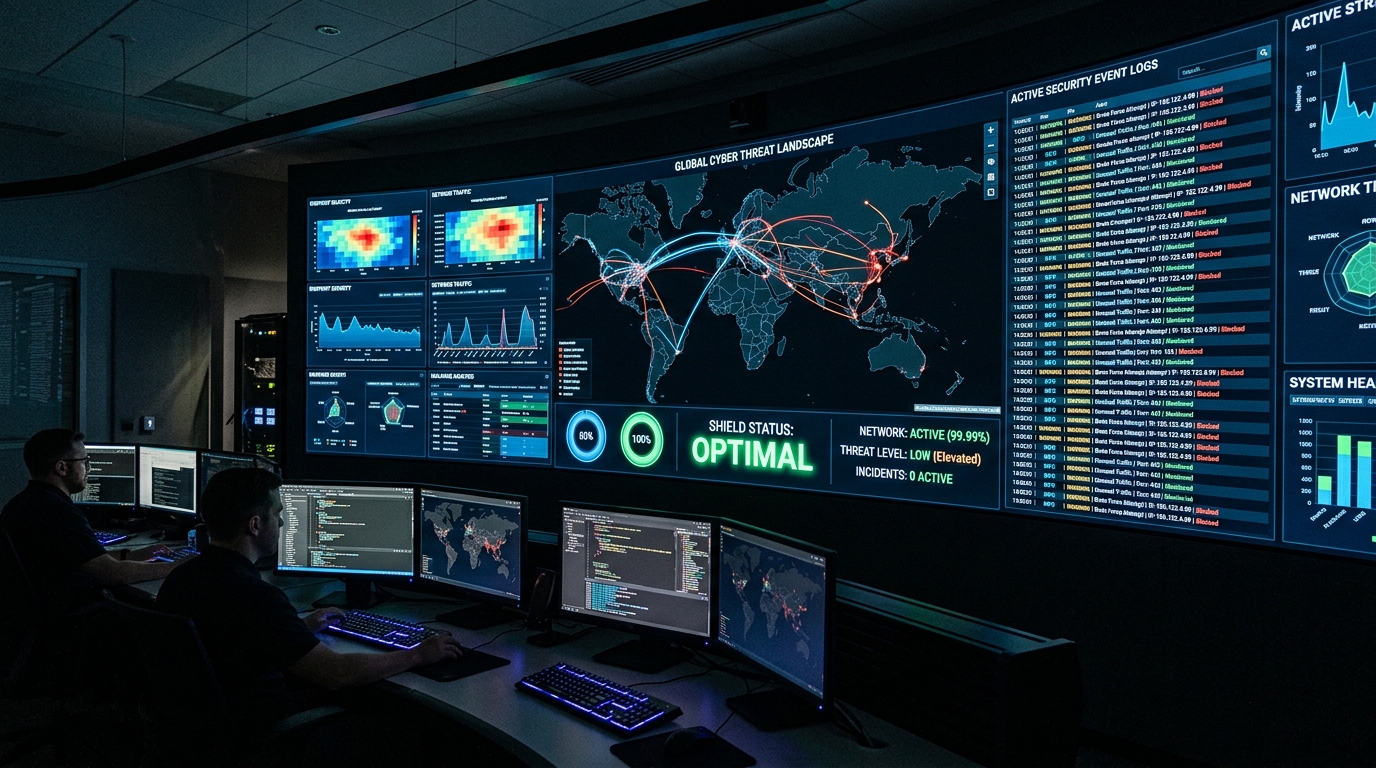
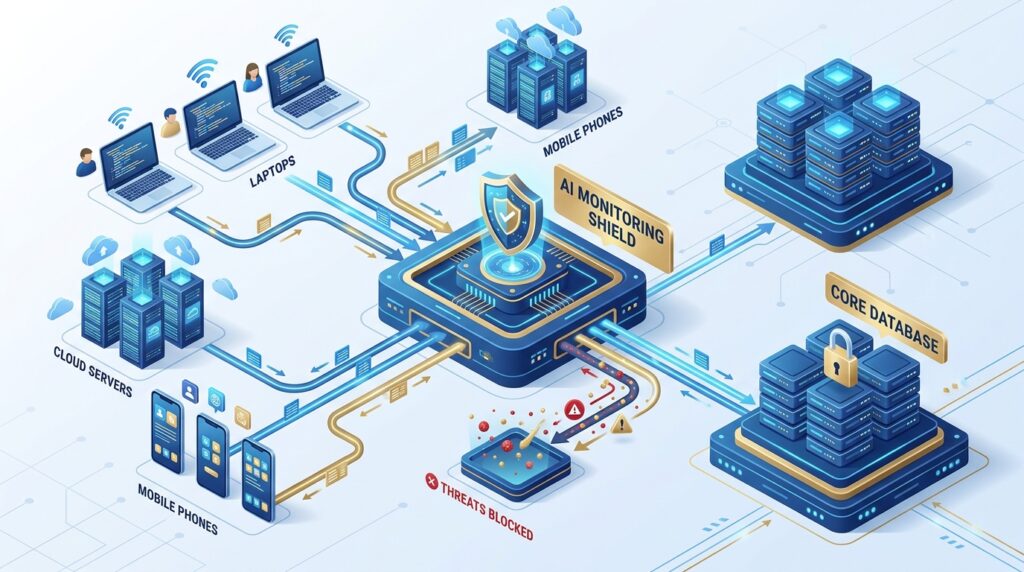
Security Operations Monitoring is the continuous, real-time tracking and analysis of your business’s digital infrastructure—including cloud apps, endpoints (laptops and phones), networks, and databases.
Instead of waiting for an antivirus pop-up or a customer complaint about a hacked account, a monitoring system collects logs and telemetry data from across your entire organization, looking for behavioral anomalies.
Think of it as a digital heartbeat monitor. If someone tries to log into your admin portal from an unusual location at 3:00 AM, or if an internal user account suddenly starts downloading mass amounts of customer records, the monitoring system flags it immediately.
2. Why Traditional Security Is Failing Businesses in 2026
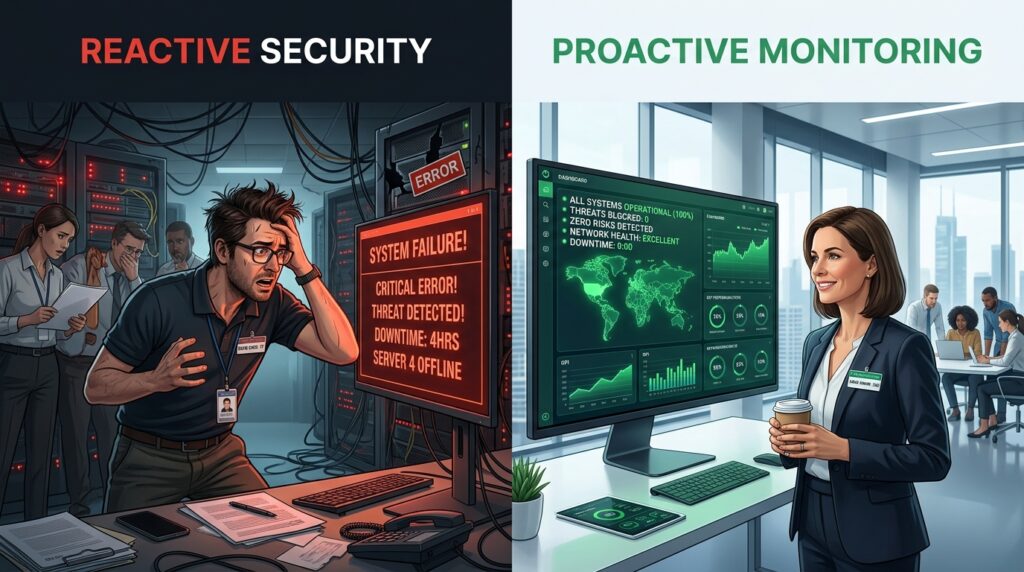
Many small and medium-sized enterprises (SMEs) rely on traditional, reactive tools—basic antivirus software and standard firewalls. Here is why that approach falls short today:
- The Speed of AI Attacks: Modern hackers use automated botnets to scan for vulnerabilities continuously. They don’t sleep, and neither do their scripts.
- The “Dwell Time” Problem: Without active monitoring, hackers can sit quietly inside a compromised network for weeks (or months) stealing data before anyone notices.
- The Cloud Shift: Because your data is spread across AWS, Google Cloud, Microsoft 365, and local devices, a traditional office firewall cannot protect what it cannot see.
3. Does Your Business Actually Need It?
You might be thinking: “We’re a growing Nigerian business or startup. Are we really a target?”
According to recent 2026 cybersecurity data, SMEs make up the vast majority of targeted digital attacks precisely because attackers assume smaller businesses lack round-the-clock monitoring.
You need Security Operations Monitoring if:
- You Process Digital Payments or Customer Data: If you store customer records, BVNs, or financial transactions, a breach triggers mandatory regulatory reporting under the NDPR.
- You Run a Remote or Hybrid Team: When staff connect from home Wi-Fi networks and public spaces across Lagos, Abuja, or beyond, your attack surface multiplies.
- You Can’t Afford Downtime: If a ransomware attack or database lockout can halt your operations for even 48 hours, the financial loss could be devastating.
4. How to Implement Security Operations Without Breaking the Bank
Building a full, in-house Security Operations Center (SOC) with 24/7 staff is unrealistic for most SMEs. Fortunately, the industry has evolved to make monitoring accessible:
- Managed Detection and Response (MDR): Outsource your monitoring to specialized cybersecurity partners who watch your systems around the clock.
- Extended Detection and Response (XDR): Deploy lightweight tools that automatically correlate data across your cloud apps and endpoints, cutting down noise and flagging real threats.
- Start with the Core: Focus monitoring on your high-risk assets first—your primary cloud environments, admin accounts, and financial databases.
The Takeaway: Visibility is Defense
Security operations monitoring isn’t about paranoia; it is about operational visibility. In 2026, the businesses that survive and scale are those that catch threats in minutes, not months.
Want to evaluate your current network visibility and see where your blind spots are?
At Apexium, we help Nigerian businesses design and implement scalable, cost-effective security monitoring and incident response frameworks that protect your bottom line and satisfy compliance standards like the NDPR.
Click here to speak with an Apexium security expert and assess your monitoring readiness today.